
The world should read at a glance
S&Lumberjack grows in small but important steps: not just through new systems, but through how calmly a player understands what's happening around them. This time the focus was on gnomes, station prompts and preparation for the next co-op check.
This isn't a major showpiece update — it's careful tuning of the game feel. When a player approaches an object, opens a shop or returns to resources after a short break, the game should help them orient themselves.
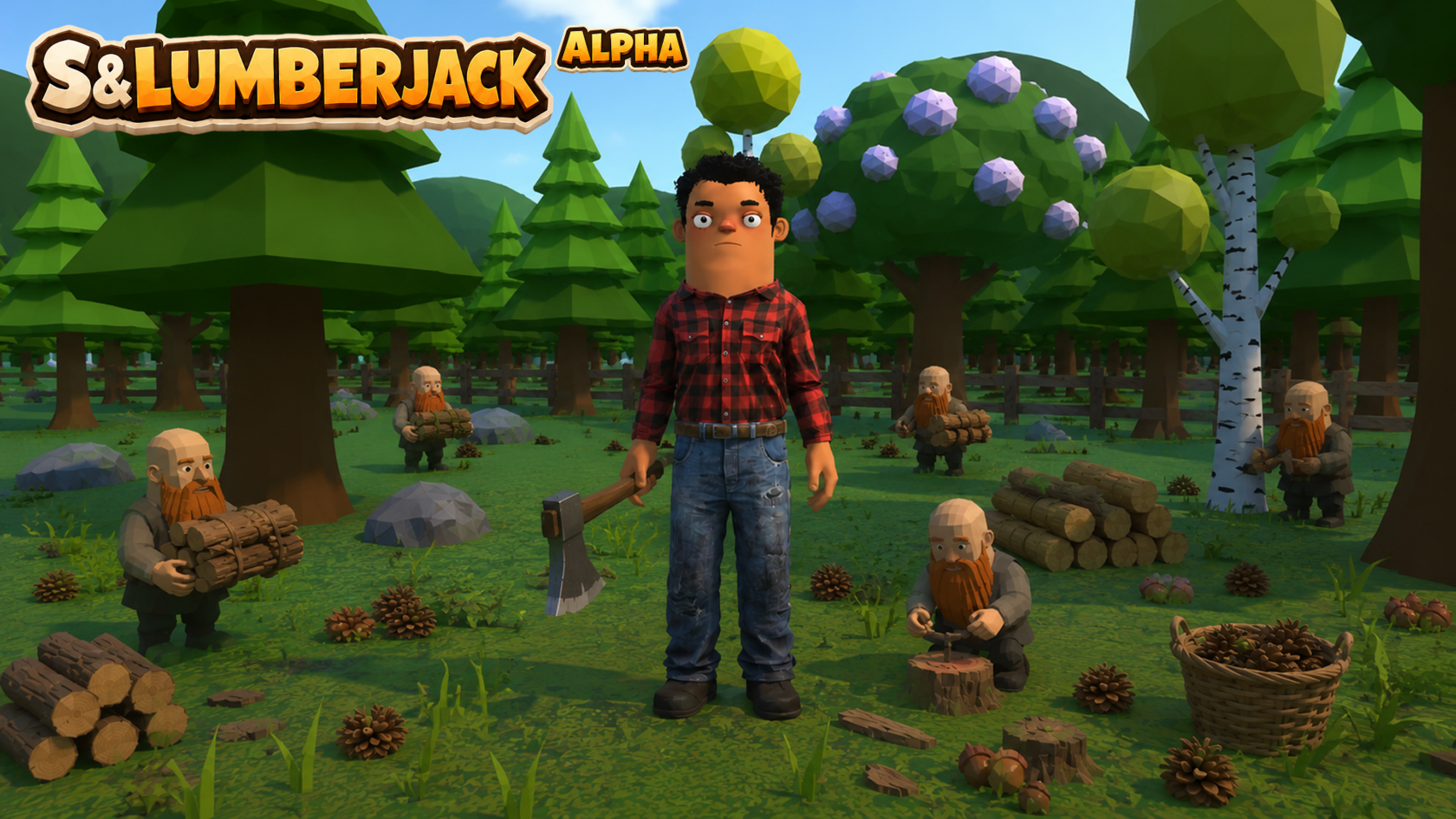
Gnomes became calmer
Gnomes help gather resources in the background, but such a system needs to live at the same pace as the main cycle of chopping, selling and upgrading. If helpers outpace the player too quickly, progression becomes less readable.
We softened the gnomes' work pace and reconsidered their place in the economy. The goal is clear: gnomes should feel like a long-term investment, not a button that takes over all the progress tempo too early.
Station prompts became clearer
Stations now have clearer two-line prompts: the object's name on top, the action below. This applies to key places like the sell counter, axe shop, sawmill, gnome workshop, perk stand, prestige, casino and cart.
When a player approaches an object, they should immediately understand what it is and why to press the interaction button. These small details aren't always visible in the changelog, but they're felt during a normal session.
- sell counter
- axe shop
- sawmill
- gnome workshop
- perk stand
- prestige
- casino
- cart
Next step — co-op check
Now the important thing is to test these changes in a live co-op scenario. In single-player preview the interface may look clean, but the real check starts when several players move through the location, gather resources and make quick decisions.
The next check should show how well the new gnome pace and station prompts keep the game readable in a real session.